
Story time (connected speech)
One day Sparky the star found a pig. Next to it was a pizza and a pear. "Wow!" said Sparky. Then Sparky saw a penguin and a popcorn. What a great day!
A quiet popping sound made by closing the lips and letting air burst out.
American English pronunciation model · voiceless · lips (bilabial) · stop · spellings: p, pp
This page practises English sounds — the words and sentences stay in English on purpose.
/p/ · Popping sound
Articulation visual awaiting professional review — not yet checked by a speech and language therapist.
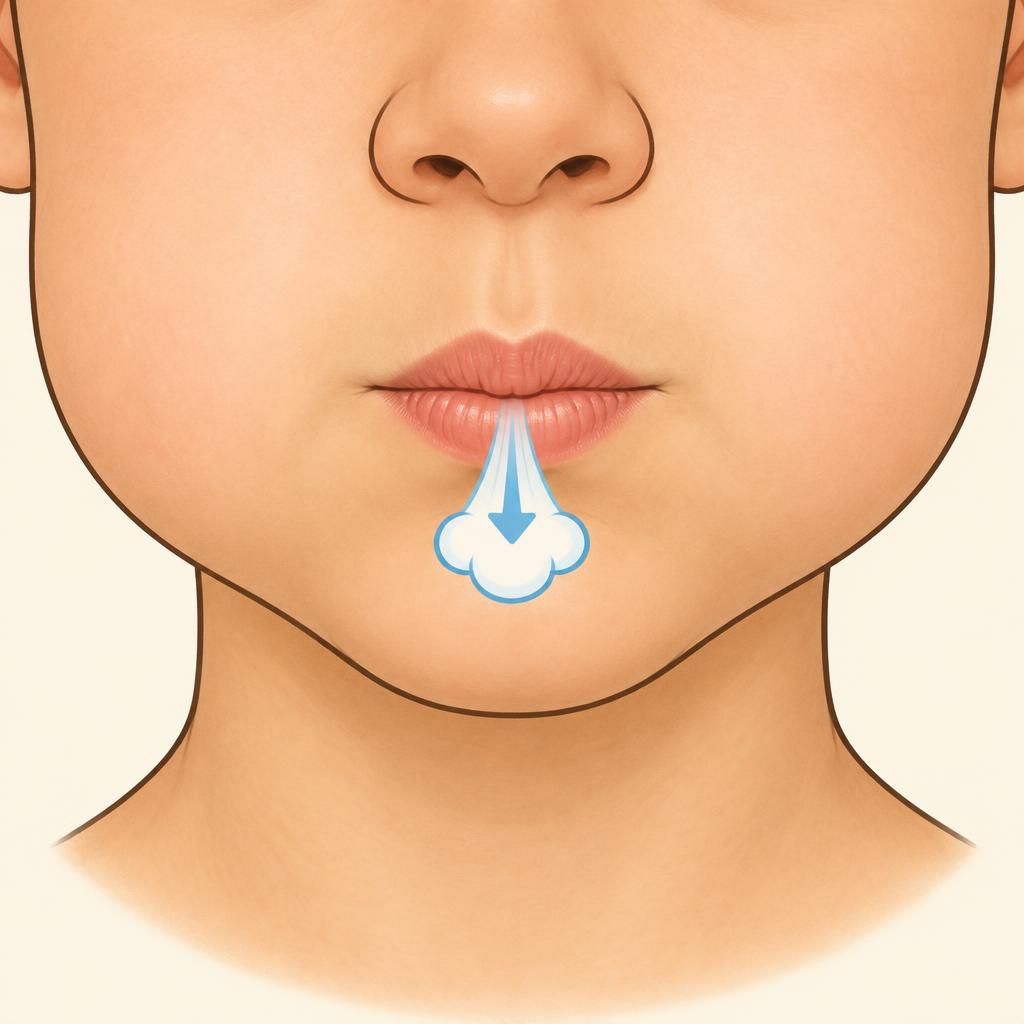
Voice off · no buzz · Airflow
Close your lips, then let out a little puff.
Both lips make the closure. The tongue does not block the air.
Movement 1/3: Lips together
The camera view stays on this device. Nothing is recorded, saved or uploaded.
/p/
Voice switched OFF
Put your hand on your throat — it should stay still and quiet. Only air.
Remember it: Popping sound — hold a tissue in front of your lips and make it move.
Step by step
Step up gradually
A sound can be easier on its own than in connected speech. Move on only when your child is saying it accurately and feels ready — not just because a worksheet is finished. Read the Parent Guide
Lips together, then a little puff of air: p-p-p.
This device can't record audio, so listening back isn't available here. Practise with the model sounds instead.

pig
/p/ · initial
“my pig”

pizza
/p/ · initial
“my pizza”

pear
/p/ · initial
“my pear”

penguin
/p/ · initial
“my penguin”

popcorn
/p/ · initial
“my popcorn”

panda
/p/ · initial
“my panda”

apple
/p/ · medial
“my apple”

puppy
/p/ · medial
“my puppy”

happy
/p/ · medial
“a happy face”

hippo
/p/ · medial
“my hippo”

cup
/p/ · final
“my cup”

map
/p/ · final
“my map”

sheep
/p/ · final
“my sheep”

soap
/p/ · final
“my soap”

mop
/p/ · final
“my mop”